
About us
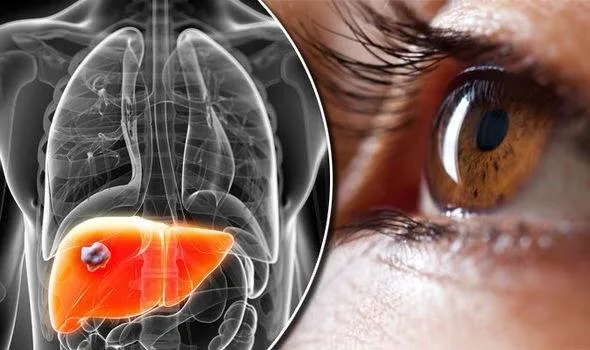
“At NEXT BIOTEK, we’re transforming early liver disease diagnosing with our groundbreaking medical device. By leveraging cutting-edge AI technology, our portable and user-friendly device accurately detects liver conditions through a simple eye scan. Join us in pushing the boundaries of medical innovation and revolutionizing healthcare”
Dr. Mahdi Afzal Aghaei, CEO
- Research and Developments:
Artificial Intelligence in Medical Devices
Artificial intelligence is increasingly being utilized in the medical device industry, paving the way for further advancements and opportunities. Its diverse range of beneficial applications is driving this progress and making it a promising tool for the future of healthcare technology.
There are multiple uses for AI in the medical device sector, such as data management, remote surgery, diagnostic and procedural assisting, clinical trials, and more. AI can improve medical device manufacturing efficiency and reduce risk through ML. Computers can take in huge amounts of data and learn errors along the way. This, paired with automation, increases efficiency and eliminates the possibility of human error. AI can also be used in hospitals and other healthcare facilities to provide an efficient patient experience while making room to treat more patients daily. Some AI platforms focus on automating and prioritizing patient safety. These platforms can help hospitals better manage their operational costs by tracking wait times, as well as reducing inpatient and emergency department length of stay.

Artificial Intelligence in Medical Devices: Past, Present and Future
Artificial Intelligence (AI) has been drawing attention in the field of medical devices. However, due to system complexity, the variability of their architecture, as well as ethical and regulatory concerns there is an ongoing need to analyze its application and performance. This study presents a narrative commentary on the applications of artificial neural networks (ANN) and machine learning (ML) algorithms in medical devices, past, current and future perspectives of application. One research focus of this study was on identifying problems and issues related to the implementation of AI in medical devices. The commentary is based on scientific articles published in PubMed, Scopus ad ScienceDirect databases, official publications of international organizations: European Comission (EC), Food and Drug Administration (FDA), and World Health Organisation (WHO) published in 2009 – 2020 period. AI is revolutionizing healthcare, from medical applications to clinical engineering. However, before grasp-ing the full potential ethical, legal and social concerns need to be resolved and its application needs to be harmonized and regulated regarding equitable access, privacy, appropriate uses and users, liability and bias and inclusiveness. https://pubmed.ncbi.nlm.nih.gov/34010259/
Application of Artificial Intelligence in Medical Technologies: A Systematic Review of Main Trends
Artificial intelligence (AI) has been increasingly applied in various fields of science and technology. In line with the current research, medicine involves an increasing number of artificial intelligence technologies. The introduction of rapid AI can lead to positive and negative effects. This is a multilateral analytical literature review aimed at identifying the main branches and trends in the use of using artificial intelligence in medical technologies.
https://www.ncbi.nlm.nih.gov/pmc/articles/PMC10359663/
Artificial Intelligence Technologies and Compassion in Healthcare: A Systematic Scoping Review
Advances in artificial intelligence (AI) technologies, together with the availability of big data in society, creates uncertainties about how these developments will affect healthcare systems worldwide. Compassion is essential for high-quality healthcare and research shows how prosocial caring behaviors benefit human health and societies. However, the possible association between AI technologies and compassion is under conceptualized and underexplored. The aim of this scoping review is to provide a comprehensive depth and a balanced perspective of the emerging topic of AI technologies and compassion, to inform future research and practice. The review questions were: How is compassion discussed in relation to AI technologies in healthcare? How are AI technologies being used to enhance compassion in healthcare? What are the gaps in current knowledge and unexplored potential? What are the key areas where AI technologies could support compassion in healthcare? https://pubmed.ncbi.nlm.nih.gov/36733854/
Application of Artificial Intelligence for the Diagnosis and Treatment of Liver Diseases
Modern medical care produces large volumes of multimodal patient data, which many clinicians struggle to process and synthesize into actionable knowledge. In recent years, artificial intelligence (AI) has emerged as an effective tool in this regard. The field of hepatology is no exception, with a growing number of studies published that apply AI techniques to the diagnosis and treatment of liver diseases. These have included machine-learning algorithms (such as regression models, Bayesian networks, and support vector machines) to predict disease progression, the presence of complications, and mortality; deep-learning algorithms to enable rapid, automated interpretation of radiologic and pathologic images; and natural-language processing to extract clinically meaningful concepts from vast quantities of unstructured data in electronic health records. This review article will provide a comprehensive overview of hepatology-focused AI research, discuss some of the barriers to clinical implementation and adoption, and suggest future directions for the field. https://aasldpubs.onlinelibrary.wiley.com/doi/pdf/10.1002/hep.31603
Application of Artificial Intelligence for the Diagnosis and Treatment of Liver Diseases
Modern medical care produces large volumes of multimodal patient data, which many clinicians struggle to process and synthesize into actionable knowledge. In recent years, artificial intelligence (AI) has emerged as an effective tool in this regard. The field of hepatology is no exception, with a growing number of studies published that apply AI techniques to the diagnosis and treatment of liver diseases. These have included machine-learning algorithms (such as regression models, Bayesian networks, and support vector machines) to predict disease progression, the presence of complications, and mortality; deep-learning algorithms to enable rapid, automated interpretation of radiologic and pathologic images; and natural-language processing to extract clinically meaningful concepts from vast quantities of unstructured data in electronic health records. This review article will provide a comprehensive overview of hepatology-focused AI research, discuss some of the barriers to clinical implementation and adoption, and suggest future directions for the field. https://aasldpubs.onlinelibrary.wiley.com/doi/pdf/10.1002/hep.31603
Application of Artificial Intelligence for the Diagnosis and Treatment of Liver Diseases
Modern medical care produces large volumes of multimodal patient data, which many clinicians struggle to process and synthesize into actionable knowledge. In recent years, artificial intelligence (AI) has emerged as an effective tool in this regard. The field of hepatology is no exception, with a growing number of studies published that apply AI techniques to the diagnosis and treatment of liver diseases. These have included machine-learning algorithms (such as regression models, Bayesian networks, and support vector machines) to predict disease progression, the presence of complications, and mortality; deep-learning algorithms to enable rapid, automated interpretation of radiologic and pathologic images; and natural-language processing to extract clinically meaningful concepts from vast quantities of unstructured data in electronic health records. This review article will provide a comprehensive overview of hepatology-focused AI research, discuss some of the barriers to clinical implementation and adoption, and suggest future directions for the field. https://aasldpubs.onlinelibrary.wiley.com/doi/pdf/10.1002/hep.31603
Application of Artificial Intelligence for the Diagnosis and Treatment of Liver Diseases
Modern medical care produces large volumes of multimodal patient data, which many clinicians struggle to process and synthesize into actionable knowledge. In recent years, artificial intelligence (AI) has emerged as an effective tool in this regard. The field of hepatology is no exception, with a growing number of studies published that apply AI techniques to the diagnosis and treatment of liver diseases. These have included machine-learning algorithms (such as regression models, Bayesian networks, and support vector machines) to predict disease progression, the presence of complications, and mortality; deep-learning algorithms to enable rapid, automated interpretation of radiologic and pathologic images; and natural-language processing to extract clinically meaningful concepts from vast quantities of unstructured data in electronic health records. This review article will provide a comprehensive overview of hepatology-focused AI research, discuss some of the barriers to clinical implementation and adoption, and suggest future directions for the field. https://aasldpubs.onlinelibrary.wiley.com/doi/pdf/10.1002/hep.31603
